
Accommodation in Italy for International Students (Study Visa Guide 2025)
Planning to study in Italy is an exciting journey—but before you apply for a study visa, one of the most important steps is finding the right accommodation. Italian consulates often require proof of housing for visa approval, and your choice of where to live can greatly affect your budget and overall student experience.
In this guide, we’ll cover everything international students need to know about student accommodation in Italy from types of housing, costs, and application documents to helpful tips on avoiding scams.
Types of Accommodation in Italy for Students
Italy offers a variety of housing options for international students. Your choice depends on your budget, lifestyle, and the city you live in.
1. University Dormitories (Student Halls)
Managed by universities or regional bodies such as DSU (Diritto allo Studio Universitario) or EDISU.
Affordable, usually ranging from €200–€400 per month.
Rooms may be shared, and facilities like kitchens, laundry, and study rooms are common.
Highly competitive—apply early through your university’s student services.
2. Private Student Residences
Modern residences with facilities like Wi-Fi, gym, cleaning services, and study lounges.
Prices range between €500–€900/month, depending on the city.
Comfortable, secure, and ideal if you prefer ready-to-move-in housing.
3. Shared Apartments
Popular among international students and Erasmus participants.
Monthly rent: €300–€600 (shared between 2–4 students).
Offers independence and cultural exchange.
Usually found through housing websites or Facebook groups.
4. Homestays (Living with Italian Families)
Great for improving your Italian language and experiencing local culture.
Rent varies from €350–€600, often including meals.
Some families provide long-term arrangements, while others prefer short stays.
5. Temporary Accommodation in Italy
Hostels, hotels, or Airbnb are good short-term options while you search for permanent housing.
Recommended for students arriving without a confirmed rental.
Average Cost of Accommodation in Italy
The cost of accommodation depends on the city size and type of housing.
Big cities (Rome, Milan, Florence, Bologna): €400–€800/month
Medium-sized cities (Turin, Pisa, Naples, Padua): €300–€600/month
Smaller towns (Perugia, Bari, Siena): €250–€500/month
Utilities (electricity, water, internet, heating): €50–€100/month extra
👉 Tip: Renting in smaller cities is more budget-friendly, but check transportation options before choosing.
How to Find Accommodation in Italy
Here are the most reliable ways to search for student housing:
University Housing Offices & DSU Websites – check if your university provides dormitories.
Online Platforms:
Facebook Groups & Erasmus Networks many students post available rooms.
Real Estate Agencies useful but may charge 1–2 months’ rent as commission.
Documents Required for Student Accommodation
Most landlords or universities will ask for:
Copy of passport.
Codice Fiscale (Italian tax code – required for contracts).
Proof of enrollment or university admission letter.
Rental deposit (usually 1–3 months’ rent).
Sometimes a guarantor, especially in private rentals.
⚠️ Tips to Avoid Scams
Unfortunately, some international students fall into housing scams. To protect yourself:
Never pay full rent before signing a written contract.
Use official university housing services or trusted platforms.
Be careful with unrealistically cheap offers in expensive cities.
Always ask for receipts when paying deposits or rent.
Accommodation & Study Visa Requirements
When applying for an Italian study visa, you may need to provide proof of accommodation. Accepted documents include:
Confirmation of a place in university dormitory.
Signed rental contract.
Hotel/hostel booking (temporary).
Invitation letter if staying with relatives/friends in Italy.
👉 This step is crucial because the Italian consulate wants to ensure you have a safe place to live upon arrival.
Best Student Cities in Italy (and Housing Costs)
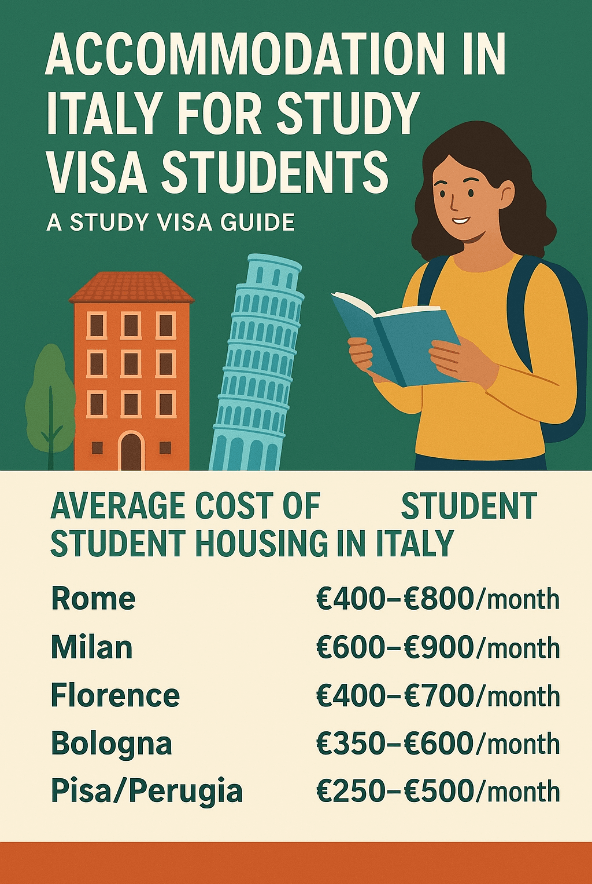
Rome – historic capital, diverse opportunities, but expensive (€500–€800/month).
Milan – fashion & business hub, modern student housing, high costs (€600–€900/month).
Bologna – lively student city, affordable (€350–€600/month).
Florence – cultural center, moderate housing prices (€400–€700/month).
Pisa/Perugia – budget-friendly, smaller cities (€250–€450/month).
Finding the right accommodation in Italy is one of the most important steps for international students. Whether you choose a university dorm, a private residence, or a shared flat, start your search early and budget carefully.
👉 Remember: Proof of housing is often required for your Italy study visa, so secure your accommodation in advance. By choosing the right place, you can enjoy a comfortable, safe, and enriching student life in Italy.
Explore More Scholarships on Study and Wander
Oman Scholarship Program 2025–26 for Pakistani Students – Fully funded scholarships in Oman for students from Pakistan. 👉 [Read More]
How to Write a Europass CV for Scholarships – A step-by-step guide to make a strong CV for European and international scholarships. 👉 [Read More]
Erasmus Mundus Scholarship 2025–2026 Guide – Learn how to apply for fully funded joint master’s programs in Europe. 👉 [Read More]
Portugal Government Scholarship 2025 – A full guide for international students to study in Portugal with funded grants. 👉 [Read More]
Scholarships Without IELTS 2025 – Find fully funded programs that don’t require IELTS for admission. 👉 [Read More]
Chevening Scholarship UK 2025–26 – Apply for a funded master’s degree in the United Kingdom. 👉 [Read More]
Frequently Asked Questions (FAQs)
1. Can I live in Italy without a rental contract?
It’s not recommended. For visas and residence permits, a rental contract or official proof of accommodation is required.
2. When should I start looking for student accommodation in Italy?
Ideally 3–4 months before your course begins, especially in big cities like Rome or Milan.
3. Do universities in Italy guarantee housing?
Not always—dormitory places are limited and often given based on merit or financial need.
4. Is it cheaper to share a flat or live in dorms?
Shared flats are often cheaper and more flexible, while dorms provide facilities but may have strict rules.