
How to Apply for a Study Visa in Europe: Complete Process
Studying in Europe can be exciting, but first, you need a study visa. Each country has its rules, but the overall process is similar. This guide explains how to apply step by step.
1. Choose Your Country and University
Before you apply for a visa, decide where you want to study. Popular countries include Germany, France, Netherlands, and Spain. Check the universities you are interested in. Make sure they offer programs for international students.
Tip: Look at tuition fees, language requirements, and admission deadlines.
2. Get Admission Letter
You cannot apply for a study visa without an admission letter from a recognized university. Apply to your chosen program and wait for acceptance. Once accepted, you will receive an official admission letter.
Important: Some countries require proof of payment for the first semester or tuition fees.
3. Check Visa Requirements for study visa
Each European country has different visa rules. Generally, you will need:
Valid passport (at least 6 months validity)
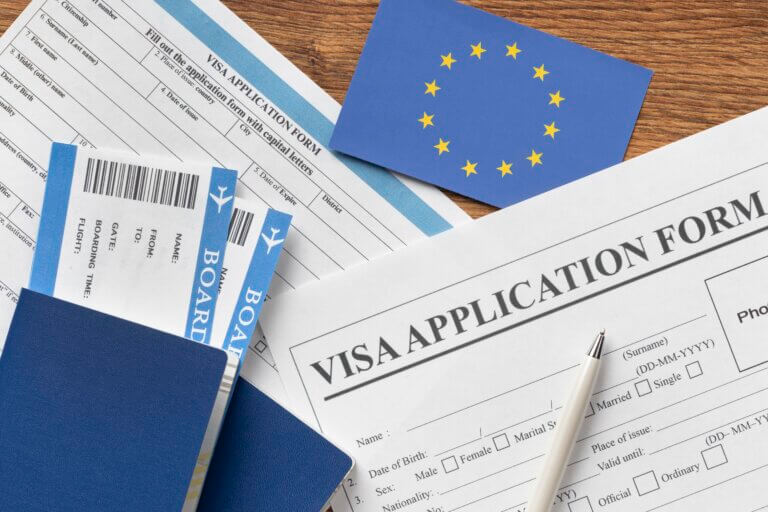
Completed visa application form
Passport-size photos
Admission letter from the university
Proof of financial means
Health insurance coverage
Proof of accommodation
Check the embassy or consulate website for exact requirements.
4. Prepare Financial Documents
Most countries require proof for your study visa that you can cover your tuition and living costs. Common documents include:
Bank statements for the last 3–6 months
Scholarship letters (if applicable)
Sponsorship letters
Tip: Make sure your funds are easily accessible.
5. Get Health Insurance
Health insurance is mandatory in most European countries. You can either buy private insurance or use the university’s recommended insurance. Make sure the coverage meets visa requirements.
6. Book an Appointment at the Embassy or Consulate
You need to submit your application in person. Book an appointment at the nearest embassy or consulate. Some countries allow online visa application first, then require submission of documents in person.
Tip: Book early, as appointments can be limited.
7. Submit Your Application
Take all your documents to the embassy or consulate. You may need to pay a visa fee. Some countries may ask for biometric data like fingerprints.
Checklist:
Completed visa form
Passport
Admission letter
Financial documents
Health insurance proof
Accommodation proof
Passport photos
8. Attend Interview (If Required)
Some countries require a short interview. They may ask about your study plans, your finances, or why you chose that university. Be honest and clear.
9. Wait for Processing
Visa processing can take 2–12 weeks depending on the country. Track your application online if possible.
Tip: Apply as early as possible to avoid delays.
10. Receive Visa and Travel
Once approved, you will get your study visa. Check the visa for correctness, including dates and your name. Plan your travel and accommodation.
Reminder: Some countries require registration with local authorities after arrival.
Applying for a study visa Europe can take time, but this guide will make it easier
Check our guide on
Top 25 Fully Funded Scholarships for 2026–2027 (Bachelor, Master, PhD)
“See the list of
Frequently Asked Questions : Study Visa Europe
1. What is a study visa Europe?
A study visa Europe is a legal document that allows international students to live and study in a European country for the duration of their program.
2. How long does it take to get a study visa Europe?
Processing times vary by country. On average, it takes 2–12 weeks from submission to approval. Apply early to avoid delays.
3. What documents are required for a study visa Europe?
You generally need:
Valid passport
Admission letter from a European university
Proof of financial means
Health insurance
Accommodation proof
Passport-size photos
4. Can I work on a study visa Europe?
Many countries allow part-time work, usually up to 20 hours per week. Check the rules of your host country before planning work.
5. Do I need health insurance for a study visa Europe?
Yes. Health insurance is mandatory in almost all European countries. You can get private insurance or use the university’s recommended plan.
6. Can I extend my study visa Europe?
Yes. You can extend your visa if your studies continue beyond the initial duration. Apply at the local immigration office before your visa expires.
7. Where can I find official information about study visa Europe?
Official sources include: